5 Ways to Write Blog Posts that Rank in 2025

Creating blog posts that rank on Google isn’t about stuffing it with keywords. In 2025, search engines are smarter than ever—and have rules and guidelines on strategies that combine SEO, reader engagement and authority building that can make your posts rank higher.
5 Ways to Write Blog Posts that Rank in 2025
1. Research the Right Keywords
Keyword research remains the foundation of any successful blog. But in 2025, it’s not about high search volume—it’s about intent. Business owners need to understand what their audience is really searching for and tailor content to meet those needs.
Use tools like Ahrefs, SEMrush or Google’s Keyword Planner to find keywords that balance search volume, competition and relevance. Long-tail keywords, especially questions or problem-based phrases often outperform generic terms in driving qualified traffic.
2. Craft Engaging, High-Quality Content
Search engines prioritize content that delivers value. Your blog posts should not only be informative, but also engaging and easy to read. Incorporate headings, bullet points and short paragraphs to make your posts scannable. Use multimedia elements like images, charts or videos to keep readers on the page longer.
“Every post we write for our clients is a mini-resource for the reader,” explains Linda Barrett, owner of All the Buzz Creative. “If someone spends time on your page because they find it genuinely helpful, that signals to Google that your site is authoritative. That’s the kind of content that ranks well.”
3. Optimize for User Experience and Mobile
Google increasingly measures user experience in its ranking algorithms. A blog that loads quickly, has a clean design and is mobile-friendly will perform better than a slow, cluttered site. Pay attention to your site speed, use responsive design and ensure your navigation is intuitive. Creating internal links to related content also improves the user experience and helps search engines understand your website structure.
4. Leverage AI and SEO Tools Strategically
AI writing tools and SEO platforms can streamline research and drafting, but they are NOT a replacement for human creativity and strategy. In 2025, the most effective blog posts combine AI efficiency with a human touch.
Use AI for brainstorming topic ideas, generating meta descriptions and optimizing readability. Pair this with data from your analytic tools to refine headlines, subheadings and calls to action.
“AI helps my business quickly analyze trends, find content gaps and even draft outlines,” Barrett says. “But the insight, storytelling and personality has to come from real humans. That’s what sets your blog apart.”
5. Promote and Build Authority
Even the best-written blog won’t rank without authority signals. Backlinks from reputable websites, social shares and engagement metrics all influence rankings.
“Think of your blog as part of your larger marketing ecosystem,” Barrett describes. “Share your posts on social media, reach out to industry partners for collaboration and encourage customer engagement. The more authoritative signals you generate, the better your chances of ranking.”
Related post: Why Your Business Shouldn’t Rely on AI for your Website and Blog Content.
Outsource Your Blog Writing to All the Buzz Creative
When it comes to creating blog posts that truly perform, All the Buzz Creative is your partner of choice. We combine SEO expertise, engaging storytelling, easy-to-read, compelling content with data-driven strategy to craft content that ranks, attracts the right audience and builds your authority. “We don’t just write blog posts, we create marketing assets for our clients,” Barrett adds.
With All the Buzz Creative, outsourcing your blogging is simple, effective and aligned with your brand. Let us handle the strategy and writing so you can focus on running your business while your blog works to grow it.
Contact All the Buzz Creative
High-ranking, engaging blogs are no longer optional—they’re essential. Turn your blog into a marketing powerhouse by contacting us today.
11 Reasons Why Your AI-Generated Copy Doesn’t Sell

AI tools have their place. They can help speed up processes, spark ideas and handle routine writing tasks. But can they sell? When it comes to creating content that truly connects with your audience and drives action, there’s still no substitute for a thoughtful, human approach. Here are 11 reasons why your AI-generated copy doesn’t sell.
1. It Overuses Buzzwords Without Meaning
Example: AI writes: “We leverage cutting-edge solutions to drive scalable growth across dynamic verticals.”
Why It Fails: It sounds impressive, but says absolutely nothing. It’s jargon-heavy, lacks clarity and doesn’t communicate value to the actual target audience. It doesn’t tell the reader what the product does or why they should care.
2. It Doesn’t Address Objections
Example: AI writes a landing page for a high-end consulting service but never addresses the price concern or the ROI.
Why It Fails: AI doesn’t instinctively know what doubts a buyer might have, and it doesn’t proactively handle them. A copywriter will identify common objections and build trust by addressing them head-on, something AI typically overlooks.
3. It’s Missing Brand Voice or Personality
Example: A fun, edgy skincare brand gets AI-generated content that sounds like a medical journal: “Our products are dermatologically formulated to meet diverse epidermal needs.”
Why It Fails: Even though the content is accurate and sounds professional, it doesn’t match the brand’s tone. And it doesn’t connect with its target market. The voice feels cold and generic.
“AI is great at sounding like everyone else. But if you want your brand to stand out, you need messaging that reflects your voice, values and unique perspective,” says Linda Barrett, owner of All the Buzz Creative. “That’s not something you can get from a tool—it comes from insight, strategy and experience.”
4. It Writes for Everyone, So It Sells to No One
Example: A B2B SaaS platform wants to target mid-size logistics companies. The AI-generated blog is so broad it could apply to any industry.
Why It Fails: Selling requires specificity. Vague benefits and general advice don’t build trust or demonstrate authority. A human writer would tailor the message to logistics pain points and decision-maker priorities.
“We’re surrounded by content today. The brands that win aren’t the ones producing the most content; they’re the ones that know how to cut through the noise,” Barrett explains. “Cutting through takes more than smart-sounding sentences.”
5. It Follows a Formula But Misses the Hook
Example: An AI-written email follows the perfect AIDA formula—Attention, Interest, Desire, Action—but the opening line is flat and overused: “In today’s fast-paced business landscape…”
Why It Fails: The structure is correct, but it lacks creativity or emotional punch. Readers don’t engage with formulaic intros—they skim right past them. A skilled copywriter would craft a sharper hook that grabs attention immediately.
6. It Doesn’t Understand Real-World Limitations
Example: AI writes: “Try our product free today and transform your workflow overnight!” for a service that actually requires a lengthy onboarding process.
Why It Fails: AI doesn’t understand friction points like tech integration, training or slow decision cycles. Overselling leads to mismatched expectations and loss of trust.
7. It Doesn’t Adapt to Sales Context
Example: A product page written by AI sounds like a Wikipedia entry: factual, descriptive and neutral.
Why It Fails: Selling requires persuasion. Features alone don’t convince. Benefits, urgency and emotional framing do. A copywriter would turn those same facts into reasons to buy.
8. It Misses Cultural Nuance and Local Flavor
Example: AI writes for a regional restaurant chain but uses generic phrases that don’t reflect local traditions or slang.
Why It Fails: Without understanding cultural context, AI content can feel generic or out-of-touch, failing to resonate with a community’s unique identity and preferences.
9. It Struggles with Humor and Wit
Example: AI attempts a lighthearted social media caption but ends up sounding awkward or flat.
Why It Fails: Humor requires timing, subtlety and emotional intelligence—qualities AI lacks. Forced or tone-deaf humor can alienate audiences rather than engage them.
10. It Lacks Adaptability for Different Buyer Personas
Example: AI generates the same blog post tone for both novice and expert audiences without differentiation.
Why It Fails: Different customer segments need tailored messaging. Without adapting language complexity or addressing specific pain points, AI content loses relevance and impact.
11. It Repeats Information Without Adding Value
Example: AI content reiterates the same point multiple times using different words.
Why It Fails: While AI tries to meet word counts or SEO goals, repetitive content feels redundant and wastes the reader’s time, reducing credibility and engagement.
Award-Winning Copywriting with All the Buzz Creative
“AI can write sentences, but it can’t build trust. That still takes a human voice,” Barrett says.
Marketing is more than just plugging in keywords or producing a blog post. It’s about telling a story your audience sees themselves in. And you can’t tell that story if you don’t truly know who they are. So, if your content sounds “good enough,” ask yourself: “Good enough for what?” Is it driving traffic? Building trust? Increasing conversions? If it’s not doing those things, it’s not good enough to grow your business. You need a professional copywriter to help drive your message home.
At All the Buzz Creative, we don’t just fill space with keywords or recycled phrases. We listen, ask smart questions and craft copy that reflects the heart of your business. Your marketing feels real, honest and uniquely yours. If you need content that’s really, really good, contact us at info at allthebuzz.net.
Photo by Andrey Matveev on Unsplash.
4 Tips to Creating Content that Builds Trust with Homeowners
For Home Remodelers, Home Builders and Home Services Pros.

Creating content that builds trust is about forming real connections with homeowners who are about to make a big investment in their home. Whether they’re remodeling a kitchen, building a new custom home, or designing a landscaping plan, they way you present your business online can play a huge role in whether a potential client reaches out to your company—or keeps scrolling. Here are four key strategies to help you create content that builds trust with homeowners.
1. Start With Transparency: Show the Process
Homeowners want more than pretty photos; they want to know how things work. Use your content to walk them through the process. What happens after the consultation? How long does a typical kitchen remodel take? What should a homeowner expect when construction starts? Sharing this type of information up front builds confidence, allays apprehensions, and helps set realistic expectations.
Don’t be afraid to talk about potential delays, common challenges or how you handle change orders. Transparency shows that you’ve seen it all before and have systems in place to handle the unexpected. Use behind-the-scenes videos, timelines and step-by-step blog posts to demonstrate your organization, communication and professionalism.
2. Use Real Stories: Highlight Your Clients’ Experiences
People love to see what others have done and want to feel a shared connection. Sharing real stories from your past clients adds credibility to your brand. Use testimonials, before-and-after galleries and video interviews so potential clients can envision themselves working with you and achieving similar results.
Go beyond generic praise and highlight specific problems and outcomes. For example, share how you helped a client stay on budget, solved a tricky layout problem or incorporated their must-haves into the final design. These stories humanize your business and make it relatable.
3. Provide Value-Driven Education, Not Just a Sales Pitch
“Trust isn’t built in one blog post or a flashy headline. It’s built in the quiet, intentional moments—when your website answers their biggest questions, when your social media tells the truth about delays or budgets, and when your emails sound like they’re written by a human, not a sales funnel,” explains Linda Barrett, owner of All the Buzz Creative. “That’s the kind of content that makes people feel safe saying yes to you.”
Homeowners don’t want to be sold to; they want to be informed. Use your content to answer the questions they’re already asking—you’ve heard them before. How do I choose the right contractor? What should I budget for a bathroom remodel? What’s the difference between quartz and granite?
When you provide helpful, educational content without a hard sell, you position yourself as a trusted expert. Invite questions or a free consultation. Create a blog, FAQ section on your site, or quick Instagram reels with homeowner tips to demonstrate your knowledge and show you’re genuinely there to help—not just to win the job.
4. Be Consistent Across All Channels
Consistency builds credibility. Ensure your website, social media, email campaigns and printed and digital materials all reflect the same tone, branding and message. Keep your content updated with your current services, staff and project photos. Outdated information or conflicting messages can raise red flags. When everything looks and sounds cohesive, homeowners are more likely to trust that their project is in good hands.
As a remodeler, builder or home services provider, you already know how important trust is on the job site. Strong, strategic content helps homeowners feel informed, understood and confident about reaching out—and that’s where the real business growth begins.
All the Buzz Creative. Copywriting and Content Creation for Remodelers, Builders and Home Services Companies
“If your content makes people feel informed, respected, and comfortable—that’s a win, whether they call you tomorrow or six months from now,” Barrett says.
At All the Buzz Creative, we understand that great content is about building trust, driving engagement and helping service-based businesses connect with real people. We specialize in crafting authentic, strategic messaging that reflects your voice and speaks directly to your ideal clients. With more than 30 years of experience in these fields, we know how to translate your expertise into clear, compelling content that gets results.
We take time to learn your business, understand your goals and develop content that works hard for you across your website, blog, email campaigns, newsletters, digital marketing and social platforms. With All the Buzz, you get a content strategy built to support your brand.
Contact Us
Contact us at info @ allthebuzz.net to learn more.
Photo by Ronda Dorsey on Unsplash.
Why Your Business Shouldn’t Rely on AI for your Website and Blog Content

AI tools are becoming more accessible and approximately 40% of global business owners are currently using AI. While these tools may be fast and affordable, relying exclusively on AI for customer-facing content is a mistake. Strong and effective content does more than just fill the space, it must build trust, drive traffic and convent visitors into leads—all requiring a level of industry understanding and strategic insight AI simply cannot provide. Here’s why your business shouldn’t rely solely on AI for content creation for your website copy and blog content.
It Lacks Industry Expertise and Context
AI tools don’t have the hands-on knowledge of how your individual business operates. No matter what your business, your services are highly specialized, and AI doesn’t know the nuances of your service area, seasonal challenges or specific terminology your customers use when describing their problems.
This lack of context results in content that sounds generic, or worse yet, inaccurate. Your customers aren’t looking for vague services descriptions, they’re searching for someone who understands their needs and knows how to solve their problems. Only a professional copywriter/content creator can consistently deliver that level of relevance and detail.
It’s Missing the Human Touch and Brand Voice
One of the most important aspects of your content is tone. Your business is built on trust, reliability and personal connection and your website and blog should reflect this. AI-generated content can mimic tone to a degree, but it doesn’t understand your brand voice, or know how you talk to your customers.
An experienced copywriter takes the time to understand your business and shapes messaging that truly reflects your business. Your content should align with how you actually serve your clients—and that requires a human touch.
There are SEO Gaps
You may believe AI will help you improve SEO, but without a strategy behind it, AI-generate content can fall flat. It often focuses on keyword stuffing rather than user intent, lacks a clear structure, doesn’t optimize for featured snippets and misses essential on-page elements like internal and outbound links, meta descriptions and calls to action.
A professional copywriter understands how to write for your SEO needs and your audience. This includes targeting location-based keywords, addressing common customer questions and building content that supports your overall marketing goals.
You Risk Inaccuracies and Loss of Trust
AI tools are prone to factual errors, especially if your subject is technical. There is a high risk that AI will get it wrong or offer outdated advice. Rephrasing, filler content, and overuse of the same words in each post are also common problems which can damage your credibility with both search engines and potential customers.
Your online content should do more than explain your services; it should guide your audience toward taking action. That requires a deep understanding of your industry, your customers’ pain points, objections and decision-making processes. AI can’t strategize around this or highlight your competitive advantages the way a copywriter can. You need copy that sounds real and offers true value.
Professional Copywriting and Content Creation by All the Buzz Creative
At All the Buzz, we don’t just write. We translate your expertise into clear, compelling messaging that builds trust, drives traffic and generates leads. We take the time to understand your brand and voice to create copy that sounds like you—not a template, not like AI, and not like your competitors.
We also know that copy is about being found online, so every piece we create is optimized for search engines. Whether you need website copy, service or landing pages, blog posts, or other written content, we tailor each word to your audience’s mindset so your customers will feel confident they found the right company to solve their problem.
Let All the Buzz take content creation off your plate with our streamlined process, fast turnaround, and zero micromanaging. Just clear, professional copy delivered when you need it. Contact us at info@allthebuzz.net.
People need your change | Writing Quotes

“People need your craft of writing, but they need your change more.”
Seth Godin, author and dot com business executive
Top 10 Consumer Trends for 2020
When marketing your business, it makes sense to pay attention to what your consumers are concerned with. One way to learn their issues is to look at the top consumer trends. Then review what’s going on in your target market and put some thought into how you can add features to your product or service line, or modify your products and services to meet these needs. Here are 10 consumer trends for 2020, excerpted from an article in Forbes.
1. Family and Home Productivity
Since the majority of households have both parents working, parents need new software tools and services to help manage their lives at home as well as at work. 2020 also brings the trends of teleworking, home offices and home study spaces for school-aged children.
2. Next-Generation Meat
The growth of companies like Impossible Foods and Beyond Meat indicate that consumers are cutting back on animal protein and looking towards plant-based alternatives. What is the next-generation trend in your industry? Continue reading →
How Do You Prove Your Expertise?
I follow marketing expert Marcia Yudkin, author of The Marketing Minute, and her latest marketing advice got me thinking. She begins with stating that your About page must address two crucial questions your prospects might wonder:
- Are you, in fact, good at what you do?
- Can I count on you to deliver as promised?
She goes on to state that your bio must include what marketers call “proof elements.” Without them, you have a trustworthiness gap.
So what are proof elements?
A proof element must provide an external indicator of competence and reliability. That means the proof must come from an outside source other than yourself or someone within your organization. Here are some examples and ways you can obtain and use your proof elements.
Types of Third-Party Proof Elements
Testimonials
Most websites have a page dedicated to testimonials. These are endorsements of a personal experience this person had with you or your company regarding quality and reliability. You should include the person’s name (or at least their initials and city), or a reference to the source, in every post to ensure that it is indeed an outside source. If you don’t have a testimonials page on your website, add one. People love to hear about other people’s experiences and trust their opinions. Testimonials can be written, or opt for video testimonials of your customers talking about their experience. Continue reading →
What to Look for in a Really Good Copywriter
The hardest thing any business owner can do is to write about him or herself or their business. It just can’t be done—or at least done well. You need that outside eye—preferably a writer with a good marketing background and solid writing reputation—to create copy about you that others will find compelling. If you try to write about yourself, you will get bogged down in too many details, wondering which are the most important. You will also labor for hours on end trying to get the copy “just right.”
What Makes a Really Good Copywriter?
When you’ve decided it is best for both your sanity and your time to hire an outside writer, here’s what you should look for:
Style of copywriting experience
Your copywriter should be up to date on the latest ways to write for the particular medium you’re writing for, be it the web, brochures, a media kit or an author bio, for example. The writing styles for each are entirely different. If the writer doesn’t know the difference, look for one who does.
Great interview skills
Most of the information for the copy will come from you. A great copywriter has the confidence to conduct an interview to gather what they need in the shortest time possible. We know you’re busy and we need to use our skills to ferret out details quickly that make your copy shine. Expect some “off the wall” questions, and roll with them. We’re also looking for insights into your personality so we can inject that into the copy.
Continue reading →
21 Tips to Increase Instagram Engagement
Want to get more followers on Instagram? I recently came across this article that had a lot of great ideas on how to do just that.
Instagram is Growing Quickly
In 21 Tips to Massively Increase Instagram Engagement in 2019, author Adam Phillips reported that 13% of the world is now using this platform, and engagement is still increasing. It has more than 1 billion monthly active users, with 50% of those users following brands.
Shares, likes and comments are reporting 10X higher than Facebook, 54X higher than Pinterest, and 84X higher than Twitter. If you haven’t done so already, you should consider adding Instagram to your marketing mix.
Among the 21 tips offered by this report are:
- Know how often to post
- Don’t preach, tell a story instead
- Use Instagram video subtitles and closed captions
- Choose the right hashtags, and
- Convert Instagram followers into email subscribers
The author goes on to explain how to put these tips into action. For example, under “Know how often to post,” he claims that the “sweet spot” is a consistent 1-2 posts a day. For when to post, he says, “Uncover your own follower’s Instagram habits by using the Insights feature of your Instagram Business Account. This helps you identify when your followers are most active.”
The article is posted on the Falcon website, so of course, there is a plug for Falcon’s social media management platform. This post does not hold any opinion as to that platform. Rather, we thought there were really good tips that might benefit those business owners and marketing managers who want and need to build their brand.
Need Social Media Marketing? Contact All the Buzz.
If you’d like to outsource your social media management, we’ll be glad to help. We can assist you in creating your social media platforms, providing content, and scheduling posts. Contact All the Buzz for expert marketing and writing.
How to Increase your SEO Rank in Voice Searches
Keeping up with all the changes in today’s technology isn’t easy. Business owners have to stay on their toes to maintain their edge over their competitors. One of the up-and-coming trends is voice searches. People are using Alexa and Siri and other voice-activated search tools to help find answers to their burning questions.
Here is an article I’m sharing from Joan Stewart at The Publicity Hound on “How to Rank Well for Voice Search.”
|
|
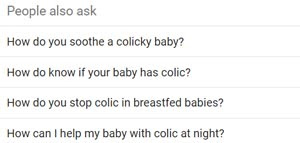 |
“Hey Siri, how can a mother help a colicky baby?” asks a reporter who’s writing a story for Parents magazine.
If you’re a parenting expert who has written a blog post on “How mothers can help colicky babies,” your article has a chance of being found in voice search.
Here’s a super tip from Website Magazine on how to rank well when people are searching by voice, as well as by typing their questions into the search engines. Continue reading →

 All the Buzz Creative